
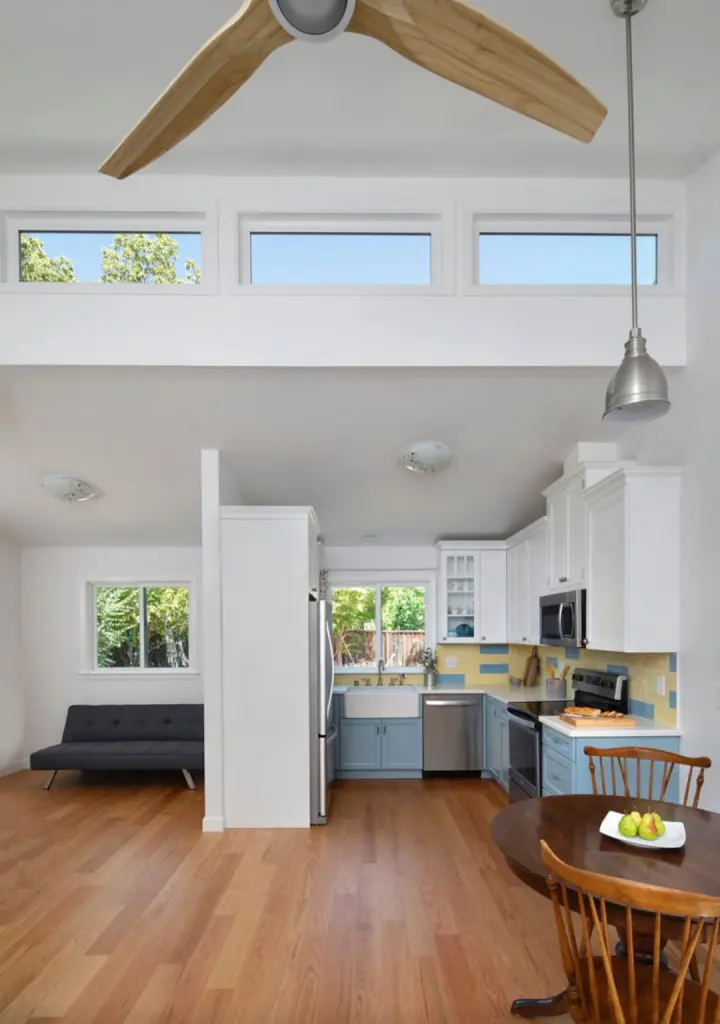
What Is an ADU?
Builders and architects refer to an accessory dwelling unit (ADU) as a secondary living space adjacent to a primary residence. An ADU attached to a home may serve as a basement apartment, home office, yoga studio, storage room or extra bedroom. A unit detached from the primary dwelling can provide a suite, small apartment, backyard cottage, carriage home, tiny home or in-law flat.
Though they may suit similar purposes, structures such as prefabricated buildings, mobile homes and trailers are not considered ADUs due to their temporary nature.
Rather, an ADU represents a permanent addition to an existing residential space. It requires permits and may need additional parking spaces or utility lines depending on the build.
In 2019, the California Assembly Bill 68 shortened the approval process for structures fitting state standards to prevent local governments from creating additional restrictions, such as imposing parking requirements and rules restricting the floor plan or design. The SB 1069 legislation released in 2022 proposed even fewer requirements and the potential for funding to further encourage ADU construction.