Understanding the New ADU Laws in California in 2025
4 MIN READ
SHARE:
If you are a homeowner in California, the state’s Accessory Dwelling Unit (ADU) laws, which first took effect in 2017, open up new possibilities for you to extend your living space. They streamline the approval process and reduce barriers to new ADU construction. ADU laws were updated in 2023, and further changes came into effect at the start of 2025, making it even easier to add a spacious home office, yoga studio or independent living suite to your home. Staying informed about the latest California housing laws for ADUs is essential for homeowners.
At Valley Home Builders, we are here to unpack the new ADU laws in California for 2025 and explore the impact these changes have on you as a homeowner considering adding an ADU.
2025 ADU Law Updates: 6 Key Changes You Should Know
California’s laws surrounding ADUs continue to evolve in response to demand and to overcome limitations surrounding their construction. New ADU California laws came into effect on January 1, 2025, which updated existing regulations. The changes in policy aim to encourage the construction of ADUs by eliminating more barriers, which is good news for you as a California property owner.
While the 2025 updates include several smaller nuances, the most significant changes to previous ADU laws are outlined here.
1. More ADUs Are Now Allowed on Multifamily Lots
The new 2025 law increases the maximum number of detached ADUs on multifamily properties to eight. This is a significant change for you if your property has apartments or units. The number of new ADUs may, however, not exceed the existing number of units within the multifamily dwelling.
2. It Is Easier for Unpermitted ADUs to Become Legal
ADUs built before January 1, 2020, may not have the correct permits in place. If this is the case for you, the 2025 law will help you get your older unit up to code without fear of fees or penalties. City building departments are required to provide you with a checklist of upgrades and repairs needed to obtain the necessary legal permits.
3. ADUs May Be Sold as Separate Condominiums if Your City Allows It
The new state ADU law enables cities to let you sell your ADU separately from your home — but each city and county needs to pass this into law for itself. So, while the new laws authorize the sale of ADUs separately, it is up to local agencies to give the final go-ahead.
4. Preapproved ADU Plans Are a Requirement
All California municipalities are now required to have a preapproved ADU plan in place. Architects can submit preapproved ADU plans for cities to review and accept, significantly speeding up the approval process.
5. Permits for Coastal Zone ADUs Will Soon Be Easier to Obtain
The 2025 ADU law requires the California Coastal Commission to provide local municipalities with clear guidance on revising their coastal programs to streamline the ADU approval process. The deadline for this is July 1, 2026, and it should expedite the process of building an ADU if you are in a coastal zone.
6. The Prohibition on Owner-Occupancy Limitations Has Been Extended
The state law prohibiting local agencies from imposing owner-occupancy regulations on ADUs expired on January 1, 2025. The new ADU law extended this prohibition indefinitely, ensuring your right as a homeowner to rent out your ADU. Make sure you understand all the ADU rules in California before renting.
California ADU Permit Requirements
Yes, you need permits to build any ADU in California. Required permits include:
Required ADU Permits
Building Permit: Required for all ADU construction and conversions
Electrical Permit: Needed for any electrical work or new panels
Plumbing Permit: Required for bathroom and kitchen installations
Mechanical Permit: Needed for HVAC systems
Grading Permit: May be required for site preparation
Permit Costs
Building Permit: $2,000-$8,000 depending on ADU size
Impact Fees: Capped at $1,000 for ADUs under 750 sq ft
Utility Connection: $5,000-$15,000 for new meters
California ADU Permit Timeline
California law mandates strict ADU permit timelines to prevent delays:
Permit Review Timeline
Review Stage
Maximum Time
What Happens
Completeness Review
15 business days
City reviews if application is complete
Plan Review
60 calendar days
Building, fire, planning departments review
Approval/Denial
60 days total
Automatic approval if city misses deadline
Pre-Approved Plans
Same-day to 30 days
Expedited process for standard designs
Total Timeline: 30-75 days for most ADU permits in California
Automatic Approval: If cities exceed 60-day limit, permits are automatically approved
What Do the New ADU Laws Mean for You as a Homeowner?
The new 2025 laws provide reassurance that ADUs in California are here to stay. These versatile units are a savvy way to create a home studio, accommodations for extended family, or even a cozy nest that young adult children can call home while they establish their careers. Adding an ADU can also boost the value of your property.
California ADU Laws: What’s Coming in 2027-2028
Confirmed Future Changes
Online Portals (AB 920): Cities over 150,000 residents must offer electronic permit submissions by January 2028
Coastal Guidance (SB 1077): Simplified coastal zone ADU process by July 1, 2026
Third-Party Review (AB 253): Available through 2036 for delayed permit reviews
HCD Handbook Updates: Annual updates to reflect new legislation
Proposed Legislation to Watch
Additional fee reductions for small ADUs
Simplified utility connection processes
Enhanced tenant protections in ADUs
Expanded pre-approved plan requirements
Like many state ordinances, there may be variations in how these laws are interpreted in local cities and counties. While navigating the complexities of the new laws can be challenging, Valley Home Builders makes stress-free ADU construction a reality. From planning to final project sign-off, our award-winning team has you covered every step of the way.
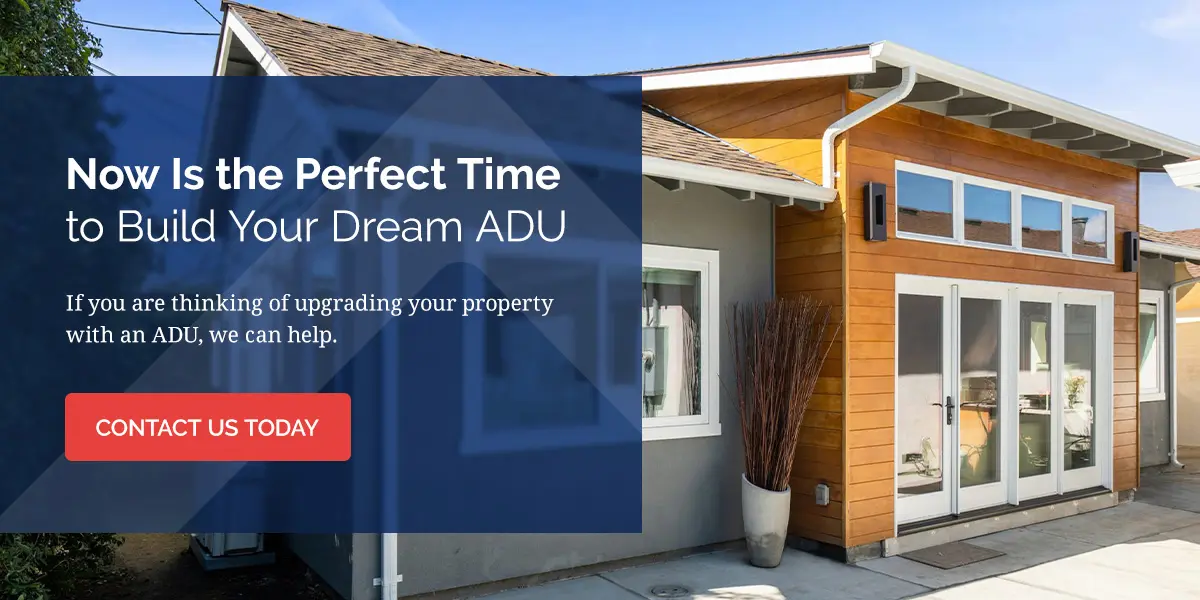
Now Is the Perfect Time to Build Your Dream ADU
Valley Home Builders has an exciting selection of preapproved ADU plans, and we also create custom-designed units. If you are thinking of upgrading your property with an ADU, we can help. Contact us today to take the first step!

 ADUs
ADUs
